Free Printable New Year Would You Rather Cards
Jump to download24 original New Year would-you-rather cards with playful countdown choices, color printable PDFs, and an optional fair prediction game.
A countdown game that starts with an easy choice
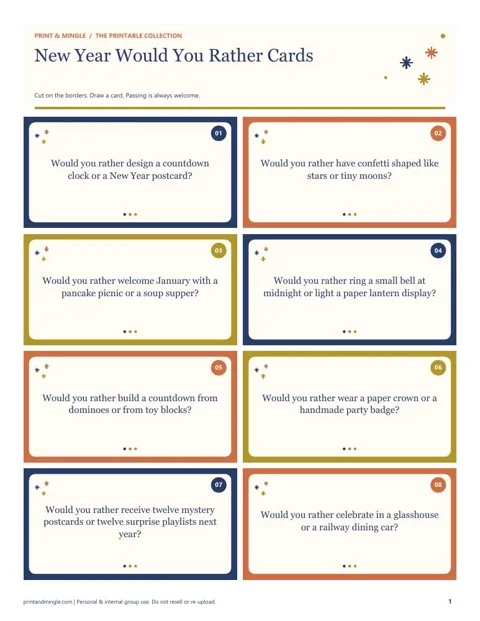
These New Year would-you-rather cards offer 24 imaginary choices about countdowns, celebrations, and small possibilities for the coming year. Players pick the first or second option and may explain why. The deck is designed for a mixed group of friends or family, with no drinking requirement, relationship quiz, or pressure to announce a serious resolution. It is useful when guests arrive at different times because someone can join between questions without learning a long set of rules. Set aside fifteen to twenty minutes, or read just three cards during a break before the countdown. The activity also works at an early evening gathering that finishes well before midnight.
What comes in the free printable pack
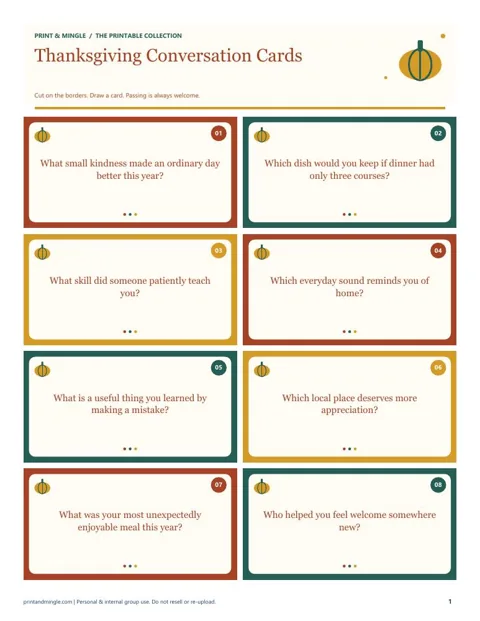
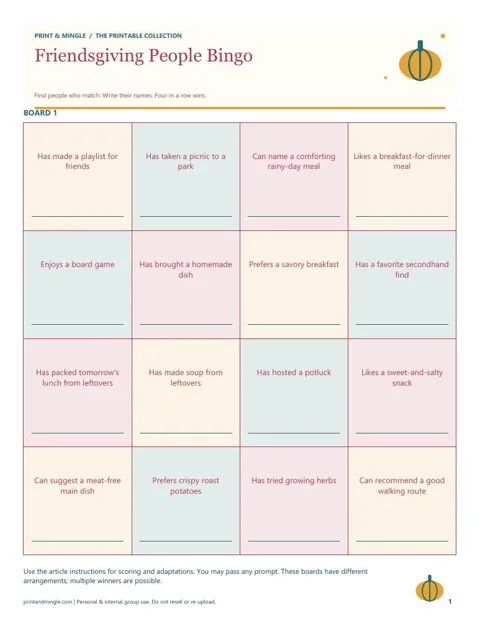
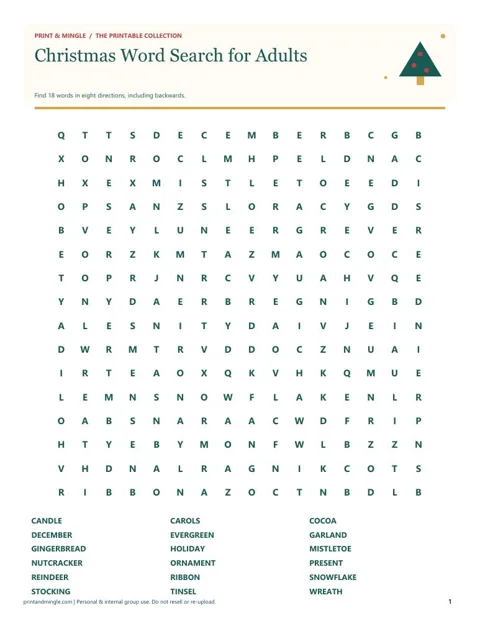
There are three color pages, each holding eight cut-apart cards. Navy, copper, and muted gold give the pack a New Year palette without printing a full page of dark ink. Choose A4 or US Letter for the same set of questions in the appropriate paper size. One deck serves the group, and the printed numbers help the host keep track of questions already used. The basic version needs only the cards and scissors. There are no correct answers and no answer key. For the prediction option, bring extra paper and pens; those score materials are not included in the download. The pack is undated, so the questions can be used in another year.
Play a quick conversation round
Shuffle the cards and invite a volunteer to read one aloud, clearly identifying the first choice as A and the second as B. Give everyone a few seconds to decide. Guests can say their choice, raise one or two fingers, or pass. Invite two contrasting explanations, then change the reader for the next card. If people begin an enjoyable conversation, let it continue instead of rushing through the entire deck. A choice is an imagined preference, not a commitment to spend money or arrange the activity. For example, someone who chooses a railway dining car over a glasshouse does not need to have traveled in either setting to imagine which atmosphere sounds appealing.
Use prediction scoring without giving anyone an advantage
For a competitive variation, select one willing featured player per round. That player privately writes A or B while everyone else writes a prediction of their answer. Reveal at the same time. Each matching prediction earns one point; the featured player cannot earn a point on that round. Rotate the featured role once around the whole group so each person has the same number of scoring opportunities. With six players, that produces six rounds and a maximum possible score of five per player. Decide before starting whether you want one complete rotation or two. Keep ties as shared results. Matching preferences does not prove who knows someone best, so treat unexpected choices as conversation starters rather than mistakes.
Keep the questions playful and the countdown visible
Choose six to eight cards in advance if the group has limited time. The deck includes creative choices about party details alongside everyday January ideas; alternating those types prevents the conversation from turning into a resolution review. Keep a visible clock nearby and stop the game several minutes before any planned countdown so nobody feels interrupted mid-answer. If you are celebrating early with children, announce the pretend countdown time clearly rather than trying to keep them awake. For a group in several time zones, pick one shared game time and let each household decide whether to stay for its own midnight. A real celebration does not depend on finishing all 24 prompts. If a card mentions an unfamiliar place or object, clarify the meaning before anyone chooses. Keep the explanation neutral so it does not make one option sound like the expected answer. A reader can rephrase a long sentence while preserving both choices, especially when children or guests using a second language are participating.
Adjust for pairs, a large group, or remote guests
Two people can predict one another's answer silently and reveal together, using one point for each accurate prediction. For more than sixteen guests, create small circles with a reader in each; print extra decks only if the circles need to run independently. In a large room, avoid asking everyone to move across the floor to show A or B when a hand signal works just as well. For remote play, read the full card twice and use spoken answers or chat messages. Allow a brief pause for delayed audio before revealing predictions. If writing is inconvenient, use two differently colored household objects to represent the choices, explaining which color means A before the first round.
Printing and a calmer follow-up
Print the version matching your paper at actual size and check that the card outlines fit inside the printable area. Use single-sided printing so every cut card has one readable question; printing the three pages double-sided would put unrelated prompts on opposite faces. Light cardstock is optional if your printer supports it. Store used cards separately during the evening and put the full dry deck in an envelope afterward. For a more thoughtful activity, offer our New Year reflection cards as an optional follow-up, giving people time to write privately if they prefer. For another meal-centered choice game, see the dinner party would-you-rather deck.
Download The Printable
Free 3-page PDF. Choose your paper size.
US Letter PDF A4 PDFPersonal gatherings and internal group use. Please do not resell or re-upload the files. Usage terms
Original AI-assisted material, checked digitally. No in-person playtest or physical print test; timing is suggested.