Free Printable Thanksgiving Place Cards
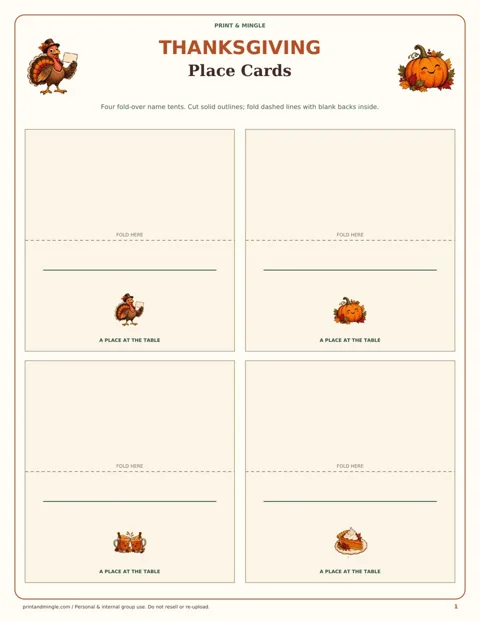
Jump to downloadFour illustrated foldable Thanksgiving place cards per sheet, with blank name spaces and a practical printing, folding, and seating guide.
A small table detail that helps guests find their place
These printable Thanksgiving place cards give each seat a clear name with a colorful harvest border. They are blank cards for handwriting, not an online name generator or an editable PDF form. Use them when a larger gathering needs a seating plan, when several guests have not met, or when you want to prepare the table before people arrive. A name card can also move with a guest if the original arrangement is uncomfortable. The goal is to make arrival easier, not to enforce a rigid seating order throughout the whole meal.
Count sheets before printing
The first page contains four foldable name tents; the second page provides preparation instructions. The A4 and US Letter versions each make four cards, so use the file that matches your printer paper. For 10 guests, print three copies of the card page and keep two spare tents. For 16 guests, print four copies plus an optional spare sheet for last-minute changes. Print the guide once rather than once per guest. The printable includes space for a name, not a complete menu, dietary record, or table-number system. Use a separate sheet for private hosting information.
Print, cut, and fold a test card first
Choose portrait orientation and actual size, also called 100 percent, in the printer settings. Avoid a borderless photo setting that may enlarge the artwork. Print one sheet and cut around a single outer card boundary. Fold along its marked center line so it stands as a tent, with the name area facing outward. Check the result on the table before producing the rest. Ordinary paper can work, while cardstock supported by your printer generally makes a firmer tent. Do not force thick stock through a printer that is not designed for it, and allow fresh ink to dry before folding.
Make names easy to read across a table
Write each guest's preferred name in dark ink with generous spacing. A short name is usually more readable than a full formal name plus a decorative message. For guests who share a first name, use an agreed initial or another familiar distinction rather than an embarrassing nickname. Test the longest name on a spare piece of paper before writing on the card. Keep extra ornament away from the letters. If handwriting is difficult, ask a willing helper to write the names or use a separate printed name label that fits inside the blank space without covering the illustration.
Use the seating plan as a helpful starting point
Consider practical access before conversation chemistry. Leave a suitable route for anyone using a mobility aid, avoid placing a guest where they must repeatedly move for serving, and let people who need to hear or see one another sit appropriately. Ask privately about a preference when needed rather than printing a reason on the card. Put guests who do not know many people near a welcoming host, but do not announce that someone needs looking after. If a guest asks to change seats, move the cards. A graceful adjustment matters more than preserving a carefully arranged photograph of the table.
Handle late changes and alternative uses
Keep a pen and spare cards nearby for an additional guest or a spelling correction. Replace a mistaken card rather than scribbling over the name repeatedly. If you use a spare tent to label a serving area, write a simple description such as drinks or extra napkins. These cards are not an allergen-control system: a dish label cannot establish ingredients or prevent cross-contact, so keep the cook or product packaging available for questions. For an open-seating gathering, leave the cards blank at a welcome station and invite guests to write a name and choose their own place.
Add an activity without overcrowding the setting
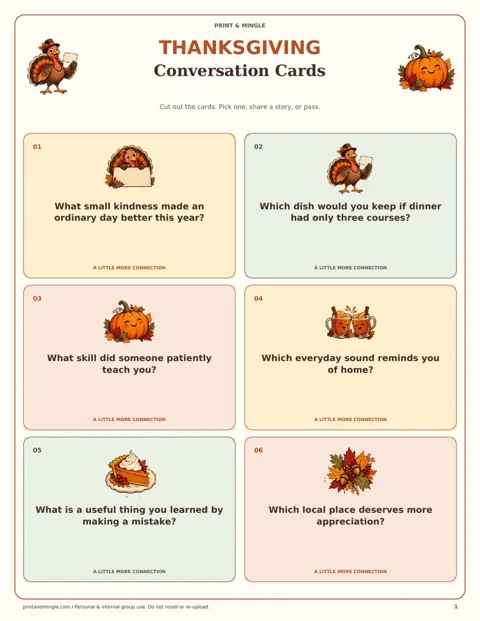
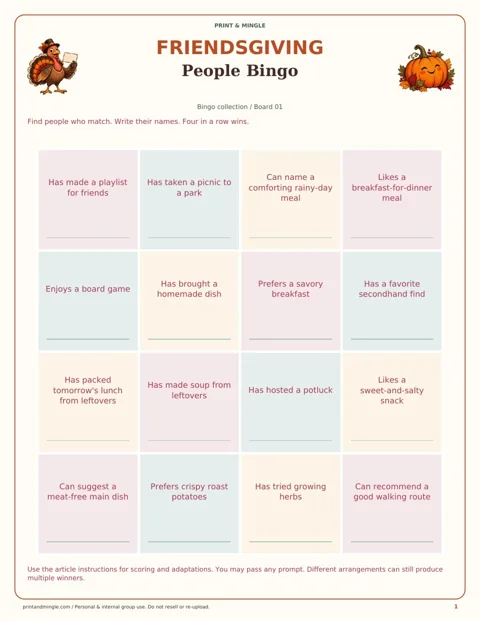
Place the finished tent where it can be read without sitting on a plate or obstructing a glass. Keep the rest of the setting simple enough for food to be served. A separate Thanksgiving conversation card can be shared between neighboring seats rather than stacked under every name card. For a gathering that begins with mingling, the Friendsgiving people bingo activity belongs at the welcome area instead. After dinner, offer guests their cards or flatten clean ones for reuse. Store unused printed tents flat in an envelope so their edges stay neat for the next gathering.
Download The Printable
Free 2-page PDF. Choose your paper size.
US Letter PDF A4 PDFPersonal gatherings and internal group use. Please do not resell or re-upload the files. Usage terms